Informacion
The complete name of any date in the Maya calendar system consists of a Tzolk’in date and a Haab date. The Calendar Round is the interweaving of the Tzolk’in and Haab calendars. In the Calendar Round, a combination of the Tzolk’in and the Haab will not repeat until 52 periods of 365 days have passed. This is based on the mathematical concept of "the least common denominator" and "the least common multiple". Both numbers, 260 and 365, are divisible by 5, and 260 divided by 5 equals 52, while 365 divided by 5 equals 73. Therefore, the least common multiple of 260 and 365 is 5 x 52 x 73 = 18,980.
Thus, the Calendar Round is equal to 18,980 days, 52 x 365 or 52 Haab years. The Maya believe that when a person reaches 52 years of age, they attain the special wisdom of an elder. A date from the Calendar Round, with components of both the Tzolk’in and the Haab calendar, can uniquely mark an event within a 52-year period. However, any event spanning more than 52 years requires an additional calendar, the Long Count calendar.
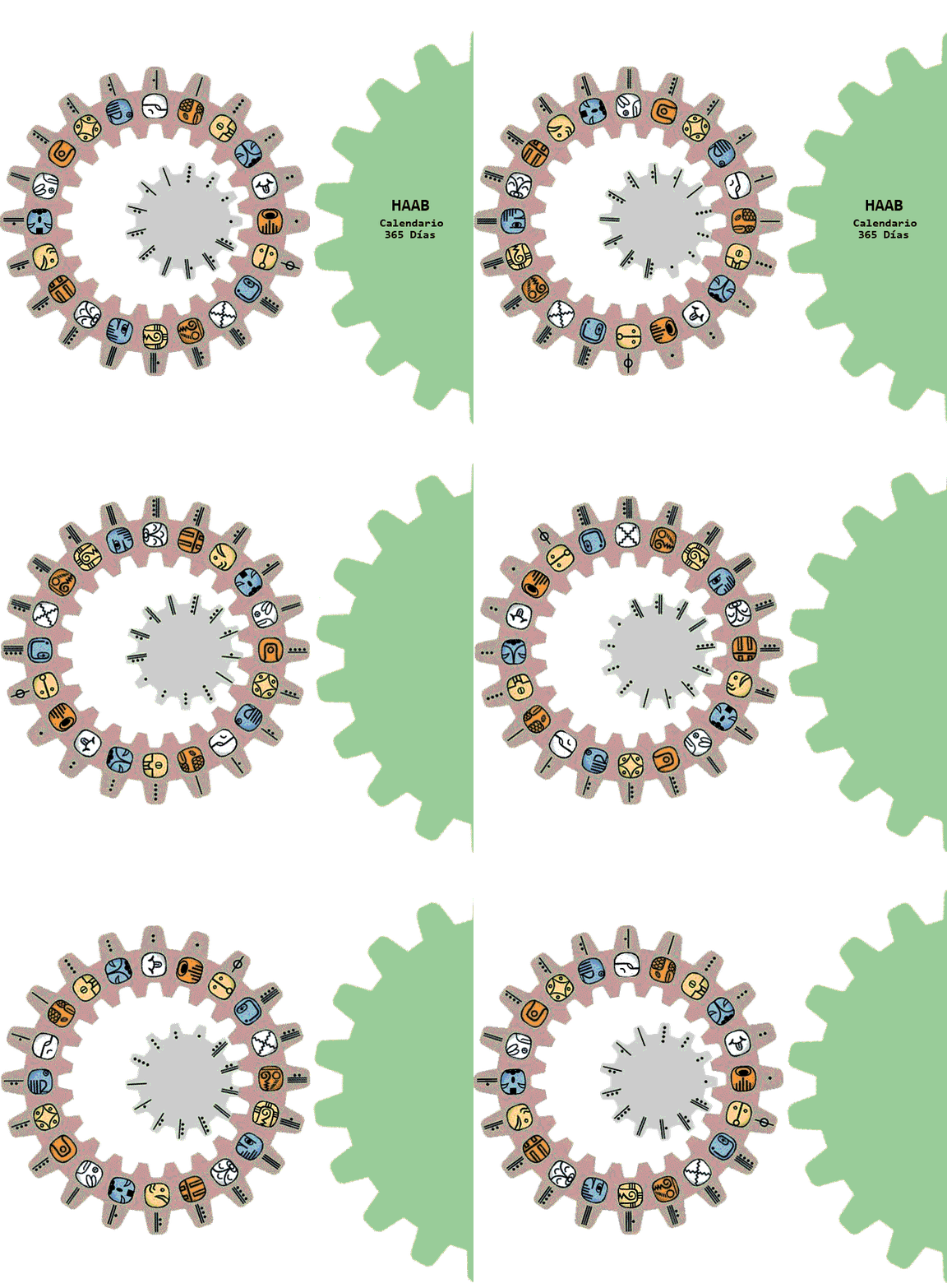
The smallest circle is composed of 13 numbers; the medium circle by the 20 signs of the twenty Maya days of the Tzolkin calendar, and the largest circle by the Haab calendar with its 365 days (eighteen months of twenty days and the short month of five days). In this count, the Maya considered that the day of creation was 4 ahau 8 cumkú.
Each cycle of 18,980 days is equivalent to 52 turns of the Haab (365-day solar calendar) and 73 turns of the Tzolkin (260-day sacred calendar), and at the end, both return to the same point. Every 52 turns of the Haab, the ceremony of the New Fire was celebrated, analogously it was a "Maya century".
Mechanism
From the Calendar Wheel, it is said that the 52-year cycle is more important than the year.
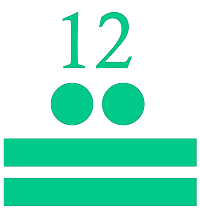
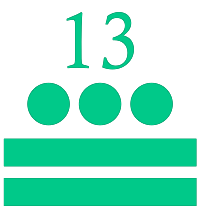
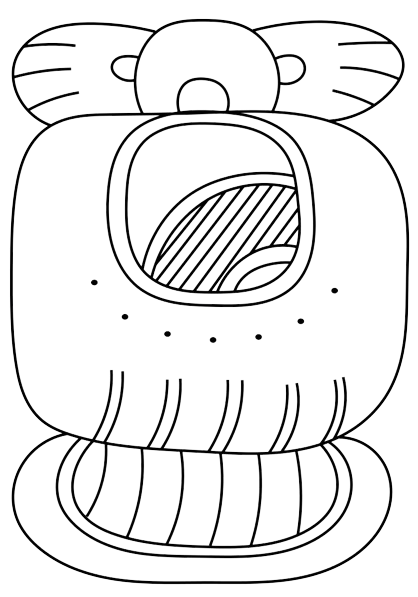
An example of a date on the calendar wheel, 8 Cauac 13 Zip, would refer to the eighth day of the Cauac trecena in the Tzolkin, which coincides with the 13th day of Zip in the Haab.
The difference between the 52 years of 365 days each and the 52 years of 360 days is exactly 260 days; thus the calculation of their coincidences can be carried out through cycles of 260 days, since
- 18,980 = 73 x 260
- 18,720 = 72 x 260
- 5,256 = 72 x 73 = 9 x 584.
It should also be noted that 13 x 360 = 18 x 260 = 4,680.
That is, if the 5 days of Uayeb' are omitted (as must have been the case in the origins of the calendar), the periods of 360 and 260 days would coincide after, respectively, 13 and 18 cycles (13 "years" of 360 days).
Four of these cycles of 13 "years" encompass 52 "years" of 360 days. Now, 52 times those 5 additional days of Wayeb' result in exactly one more cycle of 260 days.
The system of the calendar wheel serves to interpret an infinite succession of periods of 52 years. Its name in Mayan languages is unknown, but in the Nahuatl language used by the Mexicas it was called "Xiuhnelpilli," although it is more commonly written as Xiuhmolpilli, a grammatically incorrect form; which means bundling of years.
Every 52 years, the Mesoamerican cultures performed important ceremonies. In the case of the Mexicas, it was the so-called "ceremony of the new fire."