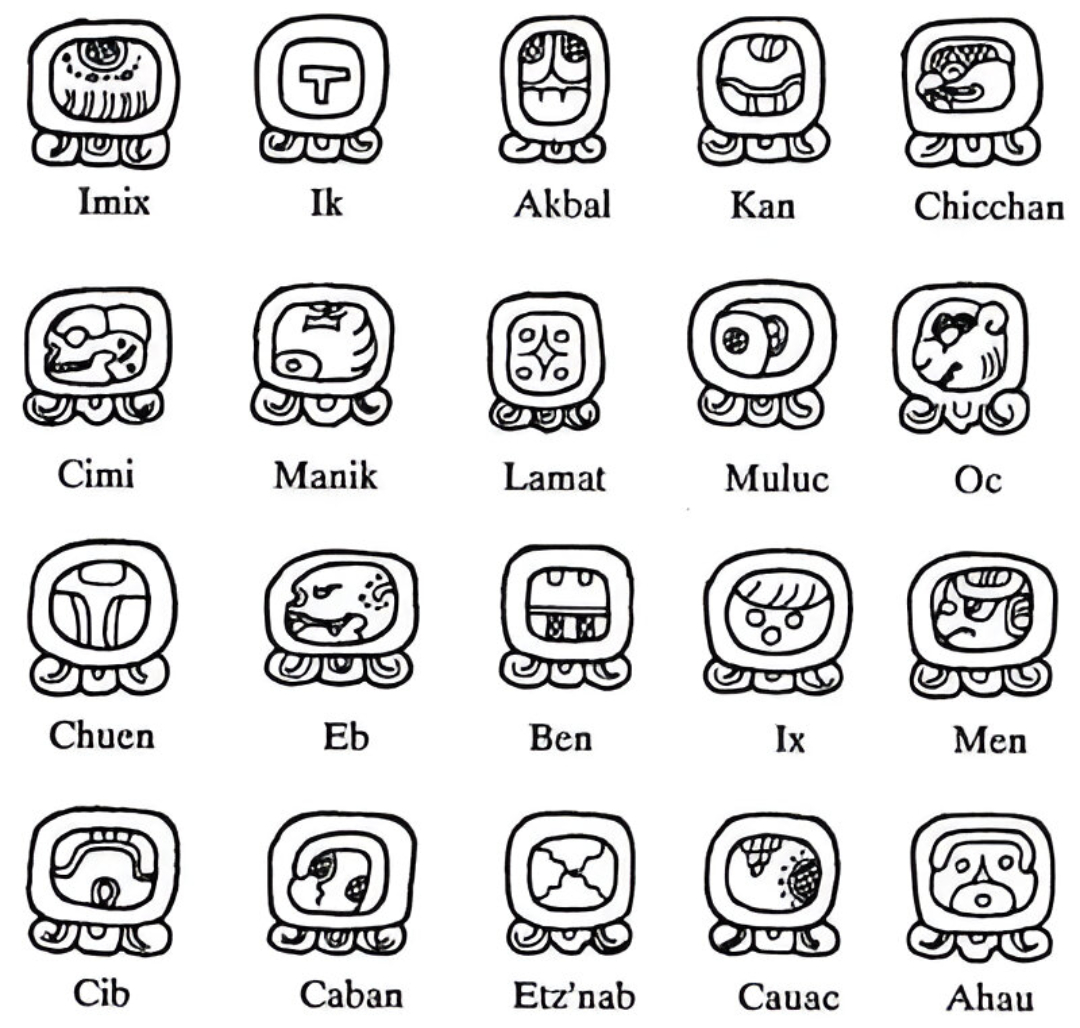
Nahual, also called nagual or nawal (in Nahuatl: nahualli 'hidden, concealed, disguised'), within Mesoamerican beliefs, is a kind of sorcerer or supernatural being that has the ability to take animal form. The term refers both to the person who has that ability and to the animal itself that serves as their alter ego or tutelary animal.
According to the tradition and worldview of Mesoamerican peoples, Nahuales are protective spirits and energies that accompany all elements of nature, including humans and animals throughout their existence.
For the Maya civilization, the nahual of each person was of utmost importance. It was something that everyone should know and learn to handle. They needed to know when they were conceived, their date of birth, the year, the energy that protects them, and their mission.
Within Mayan culture, it is said that each person is related to an animal that guides them, like a guardian angel, someone they identify with, with whom they are spiritually connected. It is also said that each person is even born with the spirit of an animal, and this spirit is responsible for protecting and guiding them.
Characteristics: It is the symbol and energy of Mother Earth. It represents the places or ceremonial centers where ceremonies take place. They are the hills, the mountains, the plains. It means Jaguar.
It represents the Maya altar or tab'al. It is a special day to ask for the life of animals, both domestic and wild. Ajaw is asked for a good harvest of any crop, especially vegetables. On this day, candles of green color are lit, as they symbolize the color of Mother Earth.
It represents the Maya altar or tab'al. It is a special day to ask for the life of animals, both domestic and wild. Ajaw is asked for a good harvest of any crop, especially vegetables. On this day, candles are lit of green color, as they symbolize the color of Mother Earth.
Spiritual Function:
Its origin: Keme destination: Iq'
Strengths:
Weaknesses:
Características: This word means sinner in K'iche'. It is the day of sinners. This day is dedicated to asking for forgiveness for sins and sinners. It is the day dedicated to the deceased. Sin is a column of smoke that hides us from the presence of God. Our ancestors said: "that sin is the offense directly to God. Not to believe, not to serve, not to praise the Heart of Heaven, the heart of the Earth. Mak is an offense to God and Wuqub’ qak’ix is an offense to one's neighbor."
It is the day of those we cannot see, the day of the deceased. The day of the strength that our past history gives us. It is also the day of punishment when we are not acting in accordance with the teachings they left us. It is the day of the anger of the deceased. (BEA)
"Ajmaq is not a bad day. It is a day to ask for forgiveness for sins. These are the days in which one prays for protection, since from these days harm can come to one because of their sins or bad thoughts.
it is death at home, natural death from illness, peaceful death. On that day one speaks with the deceased, it is to ask for forgiveness in the case of sinners.
Significa:
Significado Clave: Authority and Status.
Fortalezas:
Debilidades:
Characteristics: It is wisdom and knowledge. It is the nawal of intelligence. It represents good advice, according to grandparents. It is the wisdom that comes from the Formator and Creator. It is also one of the Time Carriers. A favorable day to give thanks for knowledge and ask for good thoughts.
One born under the influence of No'j will be intelligent, active, and will have good thoughts, as long as they know how to manage the energies of the day. It also means idea and wisdom. According to the Maya, no man is wise. That is why, in order to receive ideas and advice, one must consult the Ajaw through the "xukulem" or the Maya ceremony. They can also make such consultations through the tz'ite', through the mediation of the Ajq’ij, to receive the advice of the grandparents. Within Maya spirituality, man has ideas but not wisdom. That is why it is important to gather in council to unite ideas and thus form a science. Our ancestors gathered in council under the protection of No'j.
It is the day of wisdom. It is the day to make decisions individually or in council. It is a day that promotes the planning of a project and of the guidelines to follow in the leadership of the community and society in general. It is also the day when our thinking can flow more freely.
Spiritual Function:
Origin: Toj destination: Kan
Strengths:
Weaknesses:
Characteristics: It means stone and obsidian. It is the symbol of flint. It is the energy of the person who heals in Mayan culture. It is the power of thunder and lightning. The person born under the influence of this day can be a great healer or doctor with a lot of energy in their hands. It is ajq’íj, curing physical and psychological illnesses. It can fix bone fractures.
One of the negative influences of the day is that it can cause some suffering or discomfort. According to the Ajq’ijab’, it is a day that "eats". To avoid being reached by these negative influences, some offering must be made and the intervention of the Spiritual Guide must be requested.
It is a day that can prevent humiliation and ruin due to something or someone. It is a day of protection. Those born on this day can become choleric and can spiritually or emotionally destroy someone. Sometimes, nobody can stand them and it is difficult to understand them.
Origin: Tz'i destination: Keme
Strengths:
Weaknesses:
Characteristics: It is the nawal of the woman as a midwife. It is the day of the Spiritual Staff, the Pisom Q’aq’al. It is the lightning. It is the duality of the sacred fire in function of Mayan spirituality. It is the day of the community, of the family, of the group, and of society. It is the energy that facilitates rains to give us good harvests, mainly that of corn.
It provides the capacity and ability to heal and guide. It is the energy that strengthens the Spiritual Guides. It maintains energy and fertility. It is a day of much connection with Mother Earth and the elements by providing wisdom for the management of medicinal plants. It facilitates the unity and care of the family. It is the day of the woman as a wife and mother who warms the hearth of the home. It is also a special day for the full realization of women in the community and society.
Spiritual Function:
Origin: B'atz' destination: Kej
Strengths:
Weaknesses:
Characteristics: It is the light and the representation of Grandfather Sun. It means archer, hunter, shooter, and walker. It is the day of bodily strength and triumph of good over obstacles. It represents the triumph of Jun Ajpu and Ixbalamke over the lords of Xib’alb’a. This sign was given to grandmother Ixmukane when the cane field sprouted that the two boys planted in the courtyard of the house.
It is the day of the great Ajaw, the father and his solar representation, the day of greatness, of the strength of life. It brings light and clarity to human beings and over all humanity.
It is the regenerative force, the cycle of life. The faculty to have the entire galaxy. It governs lunar and solar eclipses. It is the moment to serve others.
Spiritual Function:
Origin: E destination: Q'anil
Strengths:
Weaknesses:
Characteristics: Symbol of the hidden forces of the universe manifested in madness. "Imox" is the name of all secret things. In general, it is a day of negative influences. It is a dangerous day. It is a symbol of the left hemisphere, the subtle part of human beings, it is sensitivity. It is the essence of our consciousness and our mind.
It is the nawal or spirit of water. It generates movement but also emotional imbalance. It is a day with negative influences and those born on this day can become troublemakers. Therefore, the day is suitable for emotional cleansing ceremonies.
It means idiocy and madness. It is a special day to ask for the abundance of water. A day to invoke for rivers and water sources so they do not dry up. Its work is to help the right hemisphere of the brain to do a better job and to adopt a good attitude.
It is the day of mental disturbance or error. It is not suitable for making decisions. It is the day when one can implore and cleanse disturbances caused by the enemy in all aspects of life.
Spiritual Function:
Origin: Aj destination: Toj
Strengths:
Weaknesses:
Characteristics: It is the wind and life. It is the nawal of rain. It is the day of the Heart of the Sky and Heart of the Earth. It is the air and the sacred breath that gives strength and life. On this day, the wind is asked to carry away the person's sufferings or illnesses.
It means air and breath of life. It is also the nawal of Jun Raqan (Hurricane) turned into a tornado. It is one of the Time Carriers. It is also the person's breath. It is the sacred, gentle, and peaceful breath that purifies the body, mind, spirit, and emotions. It is the invisible space existing between matter. It is one of the elements that produces natural phenomena.
The child born on Iq' is a child who does everything but achieves nothing. It is like the air that touches and drags everything it finds in its path. It can build but also destroy.
Spiritual Function:
Origin: I'x destination: Tz'i'
Strengths:
Weaknesses:
Characteristics: It is the symbol of the hand and of the dawn formed by the first rays of the sun that peek over the mountains to dispel the darkness of the night.
It means dawn, sunrise, light, clarity, new day. It is the renewal of energy. It is the arrival of light, of twilight, the light that peeks behind the hills and mountains.
It is the day of dawn, of the promising future that we await every day, the best days for our people and for each individual.
Spiritual Function:
Origin: Tz'ikin destination: Batz'
Strengths:
Weaknesses:
Characteristics: It is related to the word k’atik which means to burn. Symbol of fire and of the net. In the ritual, the day is mentioned as a time for entanglement and disentanglement. It is the one who tangles and untangles life.
It is the net where the corn is stored. The net used for fishing. The net where fish die. It signifies captivity and lack of freedom. Sign of oppression exercised over a community.
It is the little bundle or the brazier that one is given when receiving the Pisom Q’aq’al or the Sacred Staff. For those born on K'at, in Maya spirituality, it is recommended to visit the Ajq’ij every twenty days to perform their ceremony. Otherwise, they may encounter many entanglements in their path, work, and life.
Spiritual Function:
Origin: Ajmaq destination: E
Strengths:
Weaknesses:
Characteristics: It means movement, the symbol of the Great Energy that created the Universe. It is the Plumed Serpent or Q’uq’umatz. It is human evaluation and spiritual development. It is Wisdom and the cycle of time. It is the guardian of the forest. It is the day of transformation.
It signifies justice and balance. It is a very strong and "angry" day. It is a day that can bring bad influences like anger and quarrels. However, it is a symbol of truth and is quick and relentless when justice points someone to the losers' place. The energy of the day lends itself to problem-solving.
Spiritual Function:
Origin: No'j destination: Aj
Strengths:
Weaknesses:
Characteristics: It is the symbol of death. Symbol of the final dissolution of all things, good and bad. It means owl and death. It is rebirth. Meaning expressed through the sacred grains of Tz’ite’ or Palo de Pito. It is a favorable day to ask for the health of the sick and to make offerings for the progress of business.
It is the energy of people who die naturally. It can take away strength from a person or strengthen it. It predicts the good and the bad. It is communication with grandparents through the tallow candles offered in ceremonies. Prudence and protection to avoid accidents. It is the Supreme Judge of all things. Nawal of disease and death.
Spiritual Function:
Origin: Tijax destination: I’x
Strengths:
Weaknesses:
Characteristics: The nawal of Kej is very masculine, and if a woman is born on this day, she has a strong character and voice and is somewhat masculine in some way.
It symbolizes the deer, the four supports, the four pillars, that is, the four cardinal points. It is a strong and good day. It is a day that crushes. It is a day that demonstrates its strength and power.
Those born on this day: they have strong character and physical strength. They are good defenders of others, but they cannot defend themselves. They may be rich and possess many belongings. They generally enjoy good health as they do not get sick easily.
They are the four cardinal points that support the world; they sustain the life of man. Those born on this day are walkers and have luck in business.
It is the day when strength, fortification, hardening are asked for, so that one can be tough, enduring in case of illnesses, blows, criticisms, enduring the hardness of life. Those born in Kej could be good Maya spiritual guides.
Meaning:
Strengths:
Weaknesses:
Characteristics: This is a favorable day for petitions related to corn and for giving thanks to the earth divinity for the corn harvest.
It is the nawal of harvests. Those born on this day are good farmers. It is essential for both planting and harvesting corn.
Symbolizes the four colors of corn existing in Mesoamerica: red, black, white, and yellow. The four colors of human skin. The four cardinal points of the universe. On this day, a good harvest is requested. It is the day of the farmer.
Meaning:
Day of: Fertilization and Germination.
Strengths:
Weaknesses:
Characteristics: It means payment, offering, and gratitude. Offerings are made to pay for a fault or to amend a mistake.
It is the special day for offerings. Thanks are given for the sun, the water, the air, the food, and everything that surrounds us and all we have received from Mother Earth. Those born under Toj are sometimes the ones who pay the family debt; therefore, they may suffer health problems.
Spiritual Function:
Origin: Imox destination: No'j
Strengths:
Weaknesses:
Características: The ancient meaning of Tz’i’ is tepescuintle. In the K'iche' language, it is Lalo. Guardian of grandmother Ixmukane's cornfield from where Ixk’ik’ brought the net full of corncobs, which helped her fulfill her task in a magical way. In the Popol Wuj, it means Jun Ajpu Wuch’, tepescuintle hunter, and Jun Ajpu Utiw, coyote hunter. It is also the guardian of hills, mountains, trails, and ravines.
It represents fidelity, authority, and law. Therefore, it is the guardian of natural and spiritual law. It plays the roles of secretary.
It can influence excessive sexual behavior. Therefore, some Spiritual Guides attribute it as a symbol of sin, especially sexual impurity. Those born on this day can be very sexual, whether male or female. The intensity of this behavior depends on the numeral accompanying the Tz’i’ as the day of birth.
Función Espiritual:
Origin: Iq' destination: Tijax
Fortalezas:
Debilidades:
Características: It is the symbol of man and humanity, of human accomplishment.
Symbol of continuity with the past, as it is encompassed within the ritual. "A good day, the perpetration of the ceremonies and customs of our ancestors.
It is the day when that part of the marriage is performed in which the bride is requested, and the wedding takes place forty days later, on a day B’atz' with a higher number. On 8 B’atz', the apprentice Maya priest is publicly presented, and forty days later, the gratitude is performed.
Symbolizes time. Our ancestors, the Maya, represented time by imagining it as a thread rolled up on a reed that is found beneath the earth. This thread is unwound as time passes. History is woven with time, just as thread weaves clothes. The New Maya cycle, Wajxaqib’ B’atz’, in the ceremony is enlivened with marimba and danced around the fire. B’atz' ties and unties. It is called B’atz' because it spins. And it is the talent of the human being.
Significa:
Key Meaning: Representation and artistic talent
Fortalezas:
Debilidades:
Characteristics: Symbolizes the path and destiny. It is the guide. It leads us to a fixed point. One of the Time Carriers. It is the protection of travelers and walkers. It guides spiritual and material life.
It makes human realization possible in all orders and manifestations. But it can also symbolize the obstacles that humans stumble upon in the continuous search for that realization.
It is a good day to move anywhere. In case of danger, Ajaw E provides protection. It is also a good day to be grateful for the physical well-being, the life itself of people, and work. It is a very sacred day. For this reason, its protection can be requested, as the Popol Wuj says "that they do not fall on the descent or ascent of the road. May they not find obstacles behind or in front of them, nor anything that strikes them. Grant them good paths, beautiful flat paths...".
It is the journey, the crossing, and the route. Ceremonies or invocations are offered to clear the path of dangers and accidents.
Spiritual Function:
Origin: K'at Destination: Ajpu
Strengths:
Weaknesses:
Characteristics: Symbolizes sugar cane and cornfield. Everything related to home and family. It is the symbol left by Jun Ajpu Ixb’alamkej of his life, when he planted the sugar cane in the middle of his grandmother Ixmukane's courtyard. Aj is a symbol of the resurrection of Jun Ajpu and Ixb’alamkej, who did not die at the hands of the Lords of Xib’alb’a. It is the triumph of good over evil.
It represents destiny through the Nawal or the Nawales. 8 Aj is the day on which one's destiny is established, to call it and recognize it.
It is also young corn, tender maize. A day related to everything concerning children. It is a good day, especially to pray for the little ones.
It is also the day of illness, weakness in bone tissue, but of great spiritual energy. It is home, the house, everything related to the house. Those born in Aj can be Maya priests.
Spiritual Function:
Key Meaning: The integrity of faith
Strengths:
Weaknesses:
Characteristics: It is the symbol and energy of Mother Earth. Represents the places or ceremonial centers where ceremonies are held. They are the hills, the mountains, the plains. Signifies Jaguar.
Represents the Mayan altar or tab’al. It is a special day to ask for the life of animals, both domestic and wild. Ajaw is asked for a good harvest of any crop, especially vegetables. On this day, green candles are lit, as they symbolize the color of Mother Earth.
Spiritual Function:
Origin: Keme Destination: Iq'
Strengths:
Weaknesses: